
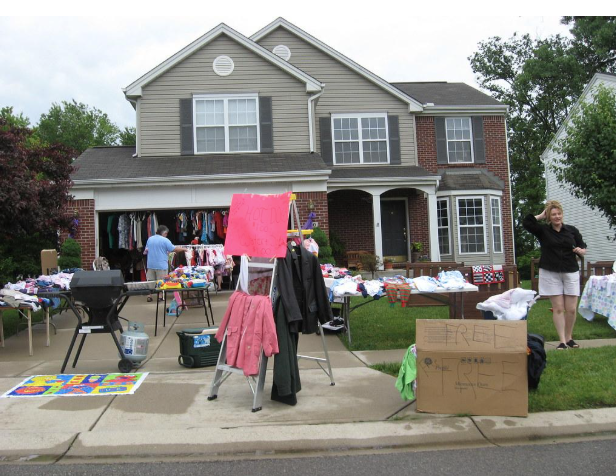
It’s easy to get caught up in the excitement of a garage sale.
You spot a lamp for $5. A set of gardening tools is only $3. Someone is selling a solid wood table for a fraction of what you’d pay at a furniture store.
At those prices, why not buy them?
The problem is that a low price doesn’t automatically make something a good deal. Once you get home, you may realize you already have three lamps, nowhere to put the table, and more gardening tools than you can use.
The real skill in garage sale shopping isn’t finding the most bargains. It’s finding things your home actually needs.
Instead of approaching a garage sale like a treasure hunter, try approaching it like a homeowner.
Start With Your Home, Not the Garage Sale
Before you head out for a Saturday morning of garage sale shopping, take a few minutes to think about what your home actually needs.
Maybe you’ve been meaning to replace some worn-out gardening tools. Perhaps you need additional storage for the garage or a few basic hand tools for home maintenance.
Make a short list before you go.
You might look for:
- ⬥ Hand tools
- ⬥ Gardening equipment
- ⬥ Kitchen items
- ⬥ Storage solutions
- ⬥ Furniture
- ⬥ Outdoor equipment
- ⬥ Seasonal items
- ⬥ Lamps and other lighting
- ⬥ Home maintenance supplies
It’s also worth checking what you already own. It’s surprisingly easy to buy something you already have simply because you forgot about it.
Keeping a home inventory can help. When you know what you own, you can shop with a better idea of what you actually need.
Know What Makes Something a Good Buy
A $3 item may be a great deal. It may also be $3 worth of clutter.
Before buying something, ask yourself four questions:
- Do I need it? Will it solve an actual problem in your home?
- Do I have somewhere to put it? If you don’t know where the item will live, think twice before bringing it home.
- Will I use it? A bargain that sits in a closet isn’t doing you much good.
- Would I buy it if it weren’t cheap? This last question can be surprisingly revealing. If the only reason you’re interested is because the price is low, you may want to keep walking.
Look for Things That Make Homeownership Easier
When you’re shopping as a homeowner, some of the best garage-sale finds aren’t necessarily the most interesting. They’re the things you’ll actually use.
Tools
Garage sales can be a good place to find basic hand tools.
Look for useful items such as screwdrivers, wrenches, pliers, hammers, clamps, and measuring tools. A well-made used tool can have plenty of life left in it.
Just inspect it carefully before buying.
Gardening Equipment
If you maintain a yard or garden, keep an eye out for useful equipment and supplies.
You might find hand tools, pots and planters, garden hoses, stakes, or outdoor storage items.
Just remember that bigger isn’t always better. Don’t buy a collection of gardening equipment simply because it seems inexpensive if you have a small yard and nowhere to store it.
Storage and Organization
Shelving, baskets, bins, hooks, and organizers can all be useful around the house.
But be careful here. Buying storage containers without a plan can actually create more clutter.
Before buying a storage solution, know what you’re going to store in it and where it will go.
Household Equipment
You may also find household equipment or supplies that can make everyday life easier.
The key is to consider the item’s condition, age, safety, and usefulness before making the purchase.
Inspect Before You Buy
A garage sale isn’t a retail store. Items are usually sold as-is, so it’s up to you to look them over carefully.
For tools and equipment, check for:
- ⬥ Cracks or broken components
- ⬥ Excessive rust
- ⬥ Missing pieces
- ⬥ Loose handles
- ⬥ Broken mechanisms
- ⬥ Damaged or frayed cords
For furniture, look for signs of structural damage, water damage, strong odors, damaged drawers or hardware, and signs of pests.
If you’re considering an electronic item, make sure it’s in good condition and, when practical and safe, verify that it works.
You should also be cautious about used items that could present safety concerns. Some products may be subject to recalls or may be missing important safety components.
Remember, you’re looking for a bargain, not someone else’s problem.
Measure Before You Buy
This is one of the easiest garage-sale mistakes to avoid.
That bookcase might look perfect. That dining table might be exactly what you’ve been looking for. But will it actually fit in your home?
Before buying furniture or other large items, know the dimensions of the space where you’ll put it.
Also consider whether you’ll be able to get the item:
- ⬥ Through the front door
- ⬥ Around corners and through hallways
- ⬥ Up or down stairs
- ⬥ Into the room where you want it
- ⬥ Into your vehicle
A little planning can save you from an awkward conversation with the seller when you discover that your “bargain” won’t fit through the door.
Don’t Let the Price Make the Decision
One of the biggest traps of garage-sale shopping is the low price.
A $2 item doesn’t feel like a significant purchase. But if you come home with ten $2 items you didn’t need, you’ve spent $20 on things that now have to be stored, cleaned, maintained, and eventually discarded.
Try a simple trick before you buy.
Ask yourself:
Would I still want this if it cost $20 instead of $2?
If the answer is no, the price may be doing more of the selling than the item itself.
Know When to Walk Away
Experienced garage-sale shoppers know that sometimes the smartest purchase is no purchase at all.
Walk away if:
- ⬥ You can’t identify a use for the item
- ⬥ It needs extensive repairs
- ⬥ You don’t have room for it
- ⬥ You’re buying it because it’s “too good to pass up”
- ⬥ You’re unsure whether it’s safe
- ⬥ You already own something that does the same job
- ⬥ You’re missing important information about the item
- ⬥ You’re buying it simply because it’s cheap
It can be difficult to leave something behind when you think someone else might buy it. But there will always be another garage sale.
Your home doesn’t need to become a storage facility for all the things you might someday use.
Consider the Total Cost
The price tag isn’t necessarily the real cost of a garage-sale purchase.
A $5 item might also require $10 in replacement parts. A piece of furniture might need hours of cleaning or refinishing. A large piece of equipment might take up valuable storage space for years.
Before buying, consider:
- ⬥ Purchase price
- ⬥ Repairs
- ⬥ Replacement parts
- ⬥ Cleaning
- ⬥ Maintenance
- ⬥ Storage space
- ⬥ Your time
- ⬥ Eventual disposal
This doesn’t mean every used item needs to be a complicated financial calculation. Just take a moment to consider whether you’re getting real value from the purchase.
Keep Track of What You Bring Home
For everyday garage-sale purchases, you probably don’t need to document every $1 basket or kitchen utensil.
But for more significant items, keeping track of what you’ve purchased can be useful.
Consider recording:
- ⬥ What you bought
- ⬥ Purchase price
- ⬥ Manufacturer and model
- ⬥ Condition
- ⬥ Where you keep it
- ⬥ Any maintenance or repair information
This is especially useful for tools, equipment, appliances, and other higher-value possessions.
Keeping a home inventory with HomeZada can help you organize information about what you own and keep important home records together. Then, when you need to find information about an item later, you don’t have to remember which garage sale you found it at or dig through a box of receipts.
The Best Garage-Sale Finds Have a Purpose
Garage sales can be a great way to save money on things you genuinely need for your home.
But you don’t have to come home with the fullest trunk to have a successful shopping trip.
A treasure hunter is looking for something interesting. A homeowner is looking for something useful.
The best garage-sale find isn’t necessarily the thing you got for the lowest price. It’s the thing you would have bought anyway, except you got it for less.
And if you know what you already own, what your home needs, and where that new purchase will go, you’re much more likely to recognize the difference.
Estate Sales and Garage Sales: How Secondhand Finds Can Transform Your Home (and Help the Planet)
