
The word “project” can mean very different things to homeowners.
For some, it’s a quick weekend fix. For others, it’s a major renovation that requires months of planning, budgeting, and coordination.
So what exactly is a home project?
A home project is any planned effort to improve, maintain, repair, or upgrade your home—inside, outside, or across your property.
But here’s the challenge:
Not all home projects are created equal.
Understanding the type, scope, and complexity of your project is the first step toward making smarter decisions—and avoiding costly mistakes.
Types of Home Projects Every Homeowner Should Know
Before you begin planning, it’s important to recognize the different categories of home projects. Most homeowners juggle a mix of these over time:
1. Small vs. Large Home Projects
- ⬥ Small projects: Painting a room, replacing fixtures, minor repairs
- ⬥ Large projects: Kitchen remodels, roof replacement, HVAC upgrades
2. Simple vs. Complex Projects
- ⬥ Simple projects: Require minimal coordination and few materials
- ⬥ Complex projects: Involve multiple systems, contractors, or design decisions
3. Urgent vs. Discretionary Projects
- ⬥ Urgent projects: Water leaks, electrical issues, structural repairs
- ⬥ Discretionary projects: Cosmetic upgrades, remodels, dream projects
4. Interior, Exterior, and Landscape Projects
- ⬥ Interior (flooring, kitchens, bathrooms)
- ⬥ Exterior (roof, siding, windows)
- ⬥ Landscape (irrigation, outdoor living, drainage)
Why this matters: Each type requires a different level of planning, budgeting, and timeline management.
Why Defining Your Home Project Matters
Many homeowners jump into projects without clearly defining them—and that’s where problems begin.
When you properly define a project, you can:
- ⬥ Avoid unexpected costs
- ⬥ Choose the right professionals (or DIY approach)
- ⬥ Plan timelines more accurately
- ⬥ Reduce disruption to your daily life
- ⬥ Make better financial decisions
This is the difference between reactive homeownership and proactive home management.
How to Plan a Home Project: Key Questions to Ask
Before starting any project, use the following framework to evaluate and plan effectively.
Budget & Financial Impact
- ⬥ Is a budget critical based on the size of the project?
- ⬥ What is the estimated total cost (materials + labor)?
- ⬥ Will this project impact your short-term or long-term finances?
Product Selection & Compatibility
- ⬥ How many products or materials are required?
- ⬥ Do these products need to work together (e.g., flooring + trim + cabinetry)?
- ⬥ Who will select the products—you or a professional?
Skills & Execution Strategy
- ⬥ What level of skill is required to complete the project?
- ⬥ Are you willing (and able) to do it yourself?
- ⬥ If not, how will you find a qualified contractor?
Hiring & Vendor Decisions
- Will you get multiple estimates or quotes?
- How will you evaluate contractors (price, reviews, timeline)?
- Do you have trusted service providers?
Timing & Seasonality
- ⬥ Is the time of year important (e.g., roofing, landscaping)?
- ⬥ How long will the project take from start to finish?
- ⬥ Are there delays due to weather or material availability?
Lifestyle Impact
- ⬥ Will this project disrupt your ability to live in your home?
- ⬥ Will you need temporary housing or adjustments?
Urgency & Flexibility
- ⬥ Is this project urgent—or can it wait?
- ⬥ Can you schedule it strategically to save money or reduce stress?
Categorizing Your Home Projects: Small, Medium, or Large
Once you’ve answered these questions, most projects will naturally fall into one of three categories:
Small Projects
- ⬥Low cost
- ⬥Minimal time
- ⬥DIY-friendly
- ⬥Limited disruption
Medium Projects
- ⬥Moderate cost
- ⬥May require professional help
- ⬥Some planning required
- ⬥Short-term disruption
Large Projects
- ⬥Significant investment
- ⬥Multiple decisions and dependencies
- ⬥Requires contractors and timelines
- ⬥High impact on daily life
The Smarter Way to Manage Home Projects
The biggest challenge for homeowners isn’t just completing projects—it’s managing them over time.
Projects don’t exist in isolation. They connect to:
- ⬥Maintenance schedules
- ⬥Replacement timelines
- ⬥Budget planning
- ⬥Home value and equity
That’s why more homeowners are shifting toward a system-based approach—tracking projects, documents, costs, and decisions in one place.
This is where platforms like HomeZada come in—helping homeowners organize, plan, and execute projects with clarity and confidence.
Final Thoughts: Start Smarter, Not Faster
Every home project—no matter how small—benefits from thoughtful planning.
By asking the right questions and clearly defining your project, you:
- ⬥Reduce stress
- ⬥Avoid costly mistakes
- ⬥Make better decisions
- ⬥Protect your home and finances
The goal isn’t just to complete projects.
It’s to become a smarter, more confident homeowner.
Bonus: Quick Home Project Planning Checklist
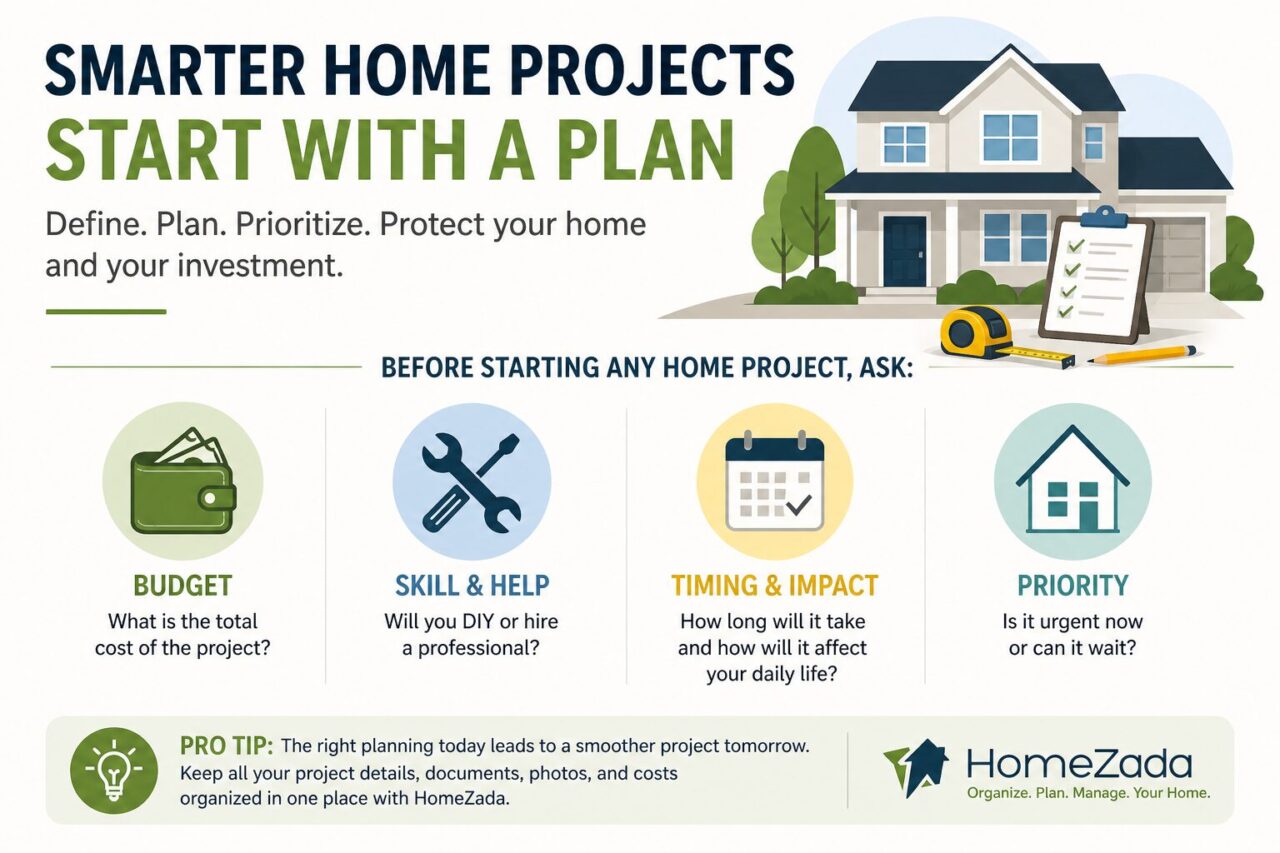
Before starting your next project, ask:
✔ What type of project is this?
✔ How urgent is it?
✔ What is my budget?
✔ Do I need a professional?
✔ What is the timeline?
✔ How will this impact my daily life?
The First Smarter Way to Forecast Major Home Replacement Costs
