
Most homeowners don’t have a clear record of what they own.
It’s not intentional—it’s just that life gets busy. Over time, we accumulate furniture, electronics, tools, appliances, and personal belongings without ever documenting them in one place.
But when something unexpected happens—a fire, theft, or even a major life transition—this lack of visibility becomes a real problem.
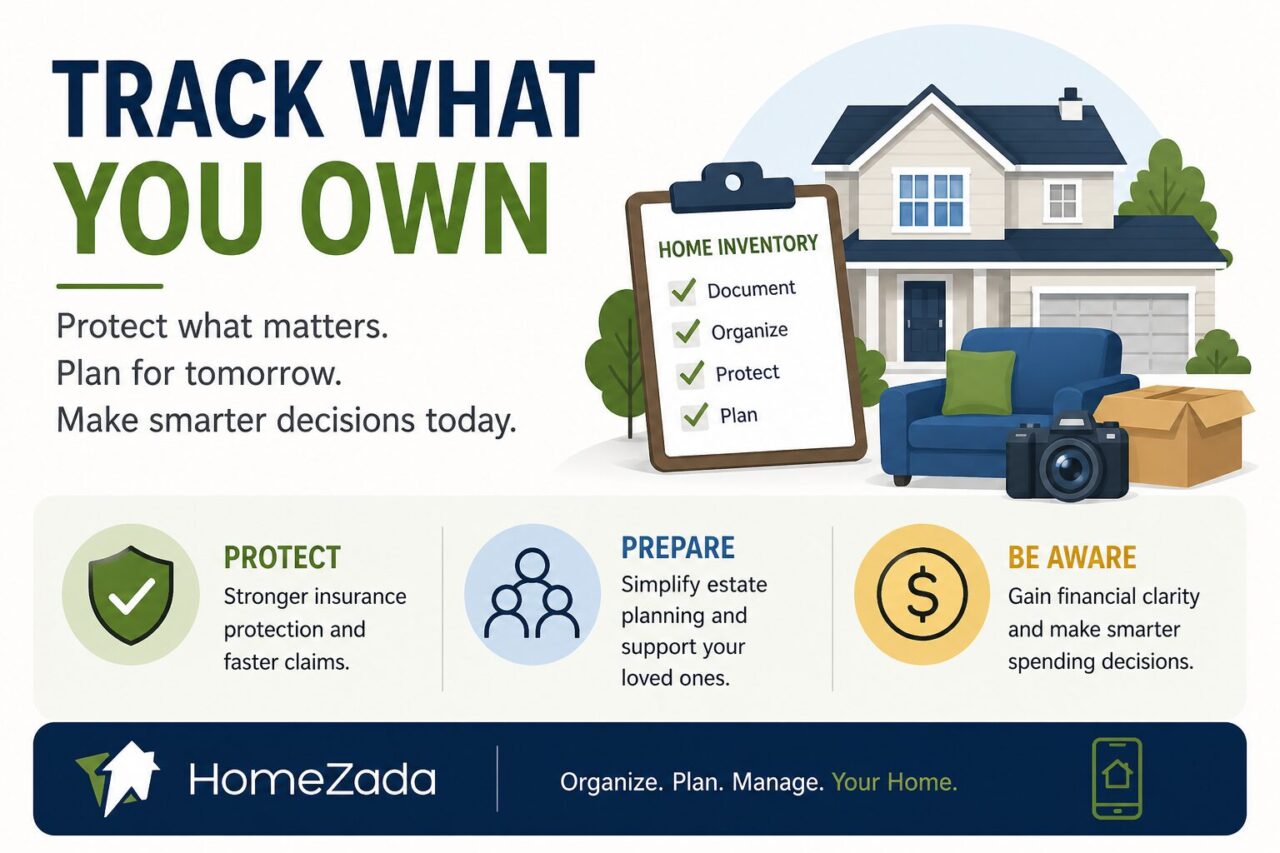
Tracking what you own isn’t just about organization. It’s about:
- ⬥Protecting your assets
- ⬥Preparing for the future
- ⬥Making smarter financial decisions today
When you know what you own, you gain clarity, control, and peace of mind.
What Does “Tracking What You Own” Really Mean?
Tracking what you own goes beyond a simple list.
A true home inventory includes:
- ⬥Photos or videos of your belongings
- ⬥Item descriptions (brand, model, details)
- ⬥Estimated or actual value
- ⬥Purchase dates (if available)
- ⬥Receipts and warranties
- ⬥Location within your home
Think of it as a living digital record of your home and everything in it—one that evolves as your life changes.
3 Key Reasons to Track What You Own
1. Insurance Protection
If you ever need to file an insurance claim, documentation makes all the difference.
Without a home inventory, most homeowners rely on memory—often forgetting items or underestimating their value.
With proper documentation, you can:
- ⬥Provide proof of ownership
- ⬥Speed up the claims process
- ⬥Increase the accuracy of reimbursement
Simply put: the more you document, the better protected you are.
2. Estate Planning & Family Preparedness
At some point, your home and belongings will need to be managed by someone else—whether that’s a family member, executor, or loved one.
Having a clear record:
- ⬥Reduces stress during difficult times
- ⬥Helps others understand what exists and where it is
- ⬥Supports smoother estate transitions
This is one of the most overlooked—but most meaningful—reasons to track what you own.
3. Spending Awareness & Financial Clarity
This is where tracking what you own becomes truly powerful.
When you understand what you already have, you can:
- ⬥Avoid buying duplicate items
- ⬥Recognize how much you’ve invested in your home
- ⬥Make smarter upgrade and replacement decisions
- ⬥Identify high-value items you may want to protect or insure
You move from reactive spending to intentional decision-making.
What Should Be Included in a Home Inventory
A complete home inventory should cover all major categories of your home:
- ⬥Furniture
- ⬥Appliances
- ⬥Electronics
- ⬥Kitchen items
- ⬥Clothing and accessories
- ⬥Jewelry and valuables
- ⬥Tools and equipment
- ⬥Collectibles or specialty items
- ⬥Home improvements and upgrades
You don’t need to capture everything perfectly—but starting with the most valuable and frequently used items is a smart first step.
How to Track What You Own (Step-by-Step)
Step 1: Start Small
Don’t try to document your entire home in one day.
Start with:
- ⬥One room
- ⬥One category (like electronics or kitchen items)
Progress builds momentum.
Step 2: Take Photos or Videos
Visual documentation is one of the easiest and most effective ways to track your belongings.
- ⬥Take wide shots of each room
- ⬥Capture close-ups of high-value items
- ⬥Record a quick walkthrough video if helpful
Step 3: Add Key Details
For each item, include:
- ⬥Name or description
- ⬥Brand or model
- ⬥Estimated value
- ⬥Purchase date (if known)
Even partial information is better than none.
Step 4: Store Important Documents
Whenever possible, attach:
- ⬥Receipts
- ⬥Warranties
- ⬥Manuals
- ⬥Appraisals (for high-value items)
These documents strengthen your records and support future decisions.
Step 5: Keep It Updated
Your home is constantly changing.
Make it a habit to:
- ⬥Add new purchases
- ⬥Remove items you no longer own
- ⬥Update values over time
Consistency matters more than perfection.
Common Mistakes Homeowners Make
Many homeowners intend to track what they own—but run into these common pitfalls:
- ⬥Waiting until after something happens
- ⬥Trying to be too detailed from the start
- ⬥Forgetting to update their inventory
- ⬥Storing information in multiple, disconnected places
- ⬥Only tracking “expensive” items and ignoring the rest
The goal isn’t perfection—it’s progress and consistency.
The Smarter Way to Track Everything in One Place
Managing photos, receipts, documents, and item details across different apps, folders, and devices can quickly become overwhelming.
That’s why many homeowners are turning to platforms like HomeZada to bring everything together.
With a centralized system, you can:
- ⬥Track all your belongings in one place
- ⬥Store photos and documents securely
- ⬥Organize items by room or category
- ⬥Connect your inventory to projects, maintenance, and financial insights
Instead of scattered information, you gain a complete picture of your home.
Final Thoughts: Know What You Own, Protect What Matters
You can’t protect, plan, or optimize what you don’t track.
Taking the time to document what you own is one of the simplest—and most impactful—steps you can take as a homeowner.
It’s not just about being organized.
It’s about:
- ⬥Protecting your investment
- ⬥Supporting your family
- ⬥Making smarter financial decisions
- ⬥Creating peace of mind for the future
Start small. Stay consistent. Build over time.
Quick Home Inventory Checklist
Use this to get started today:
✔ Take photos of each room
✔ List major items and categories
✔ Add values and descriptions
✔ Store receipts and documents
✔ Keep everything in one place
✔ Review and update annually
Revolutionizing Home Inventory with Generative Photo AI
Managing Vacation and Rental Properties with Home Inventory
Never Lose Track of Your Stuff Again: The Power of a Digital Home Inventory
