Lighting does more than brighten a room. The right lighting can make a space feel warmer, more inviting, and easier to use. But relying on a single ceiling fixture often leaves rooms feeling either too bright or too dark.
That’s where layered lighting comes in.
Layered lighting combines different types of lighting to create a room that works well for everyday activities while also giving you options for changing the mood. Instead of asking one light fixture to do everything, you use several light sources for different purposes.
What Is Layered Lighting?
Layered lighting typically combines three types of lighting: ambient, task, and accent lighting.
Think of these layers as the foundation, function, and finishing touches of a room.
Ambient lighting provides general illumination. This might come from ceiling fixtures, recessed lights, chandeliers, or wall-mounted fixtures. It allows you to move around the room comfortably without relying on smaller lights.
Task lighting provides focused illumination for specific activities. Reading lamps, under-cabinet kitchen lights, bathroom vanity lights, and desk lamps are all examples of task lighting.
Accent lighting adds visual interest and highlights specific features in a room. You might use it to illuminate artwork, architectural details, bookshelves, plants, or other decorative elements.
You don’t necessarily need all three types in every room. The goal is to combine lighting sources in a way that matches how you use the space.
Why Layered Lighting Works
Imagine a living room with only one overhead light. It may provide enough light to walk through the room, but it probably isn’t the best choice for reading, watching television, or relaxing in the evening.
Now add a floor lamp beside a chair, a table lamp on a console, and perhaps accent lighting around a bookshelf.
Suddenly, you have choices.
You can turn on all the lights when you need bright illumination for cleaning or entertaining. You can use the task lighting when you’re reading. Or you can turn on just a couple of lamps for a softer atmosphere in the evening.
Layered lighting gives you flexibility while making a room feel more comfortable.
How to Layer Lighting in Different Rooms
Every room has different lighting needs, so start by thinking about what you actually do in the space.
Kitchen
Kitchens are one of the best places to use layered lighting because you need both general illumination and focused light.
Start with ambient lighting from a ceiling fixture or recessed lights. Then add task lighting under cabinets to illuminate countertops and work areas.
Pendant lights over an island can provide additional task lighting while also becoming a decorative feature. Accent lighting can be used inside glass-front cabinets or above cabinets to highlight architectural features.
Living Room
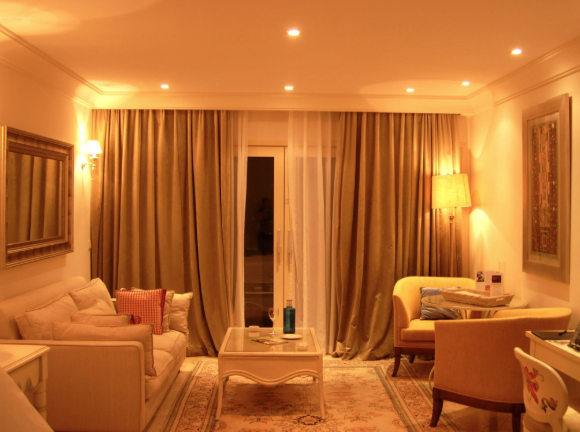
A living room benefits from having several light sources at different heights.
Use a ceiling fixture or recessed lighting for ambient illumination. Add table or floor lamps near seating areas for reading and other activities.
Accent lighting can highlight artwork, a fireplace, built-in shelving, or another focal point.
Having multiple options also lets you adjust the lighting depending on the time of day and what you’re doing.
Bedroom
Bedrooms generally benefit from softer, more flexible lighting.
A ceiling fixture can provide general illumination, while bedside lamps provide task lighting for reading. Wall sconces can be another option, particularly if you’re trying to save space on a nightstand.
Consider adding dimmers wherever possible. Being able to lower the light level can make it easier to transition from an active day to a relaxing evening.
Bathroom
Bathrooms need good task lighting, particularly around the vanity.
Overhead lighting can provide general illumination, but it may cast shadows on your face when you’re standing at the mirror. Lighting positioned on either side of the mirror can provide more even illumination for grooming and other tasks.
You can also use accent lighting to create a more relaxing atmosphere when the bathroom is being used as a place to unwind.
Don’t Forget the Hallways and Stairs
Layered lighting isn’t just for the rooms where you spend the most time.
Hallways, stairways, and entry areas also benefit from thoughtful lighting. A combination of ceiling fixtures, wall sconces, or low-level lighting can make these areas easier to navigate.
Motion-sensor lights can be particularly useful on stairs, hallways, and other areas you may need to navigate at night.
Make Your Lighting More Flexible
One of the easiest ways to improve layered lighting is to put some fixtures on dimmer switches. Dimmers allow you to adjust the amount of light without changing the fixture itself.
Smart bulbs and smart lighting systems can provide even more flexibility, allowing you to control brightness or create different lighting settings.
Before adding new fixtures, though, take a look at the lighting you already have. You may discover that simply changing the location of a lamp, adding a bulb with a different brightness, or installing a dimmer can make a noticeable difference.
Take a Room-by-Room Approach
You don’t have to redesign your home’s lighting all at once.
Walk through your home and consider each room individually. Ask yourself:
- ⬥ Is there enough general lighting?
- ⬥ do I need more focused light?
- ⬥ Are there areas that feel too dark?
- ⬥ Could a lamp or wall light make a task easier?
- ⬥ Are there architectural or decorative features I’d like to highlight?
- ⬥ Would dimmers give me more control?
As you make changes, keep track of your lighting fixtures, bulbs, and other home information along with the rest of your home’s maintenance and improvement records.
Layered lighting is ultimately about giving your home more flexibility. With a thoughtful combination of ambient, task, and accent lighting, you can make each room brighter when you need it and more comfortable when you don’t.
Pendant Lighting Buying Guide for Homeowners
7 Ways to Improve Your Home Office Lighting
This Could Be the Next Big Thing in Lighting