
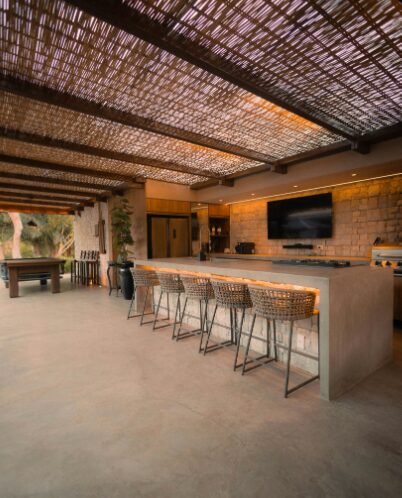
Outdoor kitchens have evolved far beyond a simple grill on the patio. Today, many homeowners are creating dedicated outdoor cooking, dining, and entertaining spaces that rival their indoor kitchens.
If you’re planning an outdoor kitchen, it’s easy to focus on the fun decisions: choosing a grill, selecting countertops, and designing the perfect layout. What often gets overlooked are the costs that don’t show up on the initial estimate.
A project that starts with a basic grill island can quickly grow into a much larger investment once utility work, permits, weather protection, site preparation, and ongoing maintenance are factored into the equation.
Before you break ground, here are some of the hidden costs you should consider.
Utility Connections Can Add Thousands to Your Budget
One of the biggest surprises for many outdoor kitchen projects is the cost of extending utilities.
Depending on your design, your contractor may need to install:
- ⬥Electrical service
- ⬥Gas lines
- ⬥Water supply lines
- ⬥Drainage systems
- ⬥Additional outlets and task lighting
The farther your outdoor kitchen sits from existing utility connections, the more labor and materials the project requires. Trenching for gas, water, and electrical lines can add several thousand dollars to the overall cost, especially if utilities must be extended across a large backyard.
Before you finalize your design, obtain detailed estimates for utility work. Once you understand those costs, the next step is determining whether your project will trigger permit and inspection requirements that can affect both timelines and budgets.
Permits and Inspections Can Create Unexpected Delays
Outdoor kitchens often involve multiple building systems, which means local building departments may require permits for:
- ⬥Electrical work
- ⬥Plumbing installations
- ⬥Gas line connections
- ⬥Structural additions
- ⬥Permanent roofs or covered structures
Permit fees themselves are often relatively modest. The larger expense can come from delays, additional inspections, or design modifications required to meet local codes.
For example, a failed inspection could delay construction for several weeks while contractors make corrections and schedule a reinspection.
Keeping permit documentation, contractor information, and inspection records organized can save time later if future buyers, contractors, or inspectors request documentation. Once permits are addressed, appliance selection often becomes the next area where project costs begin to expand.
Appliance Costs Extend Well Beyond the Grill
Many people budget for a grill but underestimate the cost of outdoor-rated appliances.
Popular additions include:
- ⬥Refrigerators
- ⬥Ice makers
- ⬥Beverage coolers
- ⬥Side burners
- ⬥Warming drawers
- ⬥Pizza ovens
- ⬥Outdoor sinks
Unlike indoor appliances, outdoor models must withstand heat, humidity, rain, and freezing temperatures. As a result, they often cost substantially more.
For example, an outdoor-rated refrigerator can cost two to three times more than a comparable indoor model.
Many of these appliances also come with separate warranties, maintenance schedules, and service requirements. Keeping manuals, warranty information, receipts, and repair records organized can save considerable frustration down the road. HomeZada makes it easy to store this information in one location so it’s available whenever you need service, maintenance, or warranty support.
Weather Protection Often Becomes a Separate Project
Outdoor kitchens face conditions that indoor kitchens never encounter.
Sun exposure, rain, humidity, snow, and temperature swings can all shorten the lifespan of appliances, cabinetry, and countertops.
To protect their investment, many homeowners add:
- ⬥Pergolas
- ⬥Covered patios
- ⬥Roof extensions
- ⬥Protective appliance covers
- ⬥Wind screens
- ⬥Shade structures
While these additions can improve comfort and help protect appliances from weather damage, they can also add thousands, or even tens of thousands of dollars, to the overall project budget.
Protecting the space from the elements is only part of the equation. Maintaining that investment year after year creates another category of expenses many people overlook.
Maintenance Costs Continue Long After Installation
An outdoor kitchen is not a one-time expense.
To prevent premature appliance failures, corrosion, staining, and weather-related deterioration, you’ll need to perform ongoing maintenance such as:
- ⬥Cleaning grills and cooking surfaces
- ⬥Inspecting gas connections
- ⬥Sealing countertops
- ⬥Protecting cabinetry from moisture
- ⬥Winterizing plumbing systems
- ⬥Replacing worn covers and accessories
Individually, these tasks may not seem expensive. Collectively, they can add hundreds of dollars per year in maintenance costs.
Creating a maintenance schedule helps ensure routine upkeep doesn’t fall through the cracks. Many homeowners use HomeZada to track recurring maintenance tasks, store service records, and keep warranty information connected to each appliance and home asset.
Outdoor Cabinets and Countertops May Wear Faster Than Expected
Even materials designed for outdoor use eventually show signs of wear.
Depending on your climate and exposure levels, cabinetry may experience:
- ⬥Fading
- ⬥Warping
- ⬥Corrosion
- ⬥Moisture damage
Countertops can develop:
- ⬥Staining
- ⬥Cracking
- ⬥Surface wear
The lifespan of these materials often depends on installation quality, weather conditions, and how consistently they’re maintained.
Spending more upfront on higher-quality materials may increase your initial budget, but it can help reduce replacement costs later.
Landscaping and Site Preparation Can Cost More Than the Kitchen
The outdoor kitchen itself is often only one portion of the overall project.
Additional expenses may include:
- ⬥Patio expansion
- ⬥Grading and drainage improvements
- ⬥Retaining walls
- ⬥Hardscaping
- ⬥Landscape lighting
- ⬥Irrigation modifications
In some projects, correcting drainage issues, expanding the patio, and building retaining walls can cost nearly as much as the outdoor kitchen itself.
Identifying these expenses early helps prevent unpleasant surprises during construction. Even after the project is complete, there’s another financial consideration worth reviewing: your insurance coverage.
Insurance Coverage May Need Updating
Depending on the scope of your project, your homeowners’ insurance policy may need to be updated.
Features such as:
- ⬥Built-in appliances
- ⬥Permanent structures
- ⬥Gas connections
- ⬥Fire features
can increase replacement costs and affect coverage requirements.
If a storm, fire, or other covered event damages your outdoor kitchen, detailed records can make the claims process much smoother. Keeping contractor invoices, permits, appliance specifications, warranties, and project photos organized gives you documentation when you need it most.
Future Repairs and Replacement Costs Are Inevitable
Even the highest-quality outdoor kitchen will eventually require repairs, upgrades, and replacements.
Over time, you may need to:
- ⬥Replace grills
- ⬥Upgrade refrigeration units
- ⬥Repair utility connections
- ⬥Refinish countertops
- ⬥Replace cabinet hardware and components
Having access to installation dates, model numbers, warranty information, and product specifications can significantly reduce the time spent searching for replacement parts or scheduling repairs.
Keeping this information organized also makes it easier to budget for future upgrades as equipment reaches the end of its useful life.
Plan for the Full Lifecycle of Your Outdoor Kitchen
The homeowners who are happiest with their outdoor kitchens are rarely the ones who spend the most. They’re the ones who understand the full lifecycle cost of the project before construction begins.
Installation costs are only part of the equation. Utility work, permits, weather protection, maintenance, repairs, insurance considerations, and eventual replacements all contribute to the long-term investment you’ll make in the space.
Just as important is managing the information that comes with a major home improvement project. Contractor details, warranties, manuals, permits, maintenance schedules, and repair records become increasingly valuable as the years pass.
Keeping those records organized with a platform like HomeZada helps protect your investment, simplifies maintenance, and makes future repairs and upgrades much easier to manage.
Tips for an Outdoor Kitchen on a Budget
