
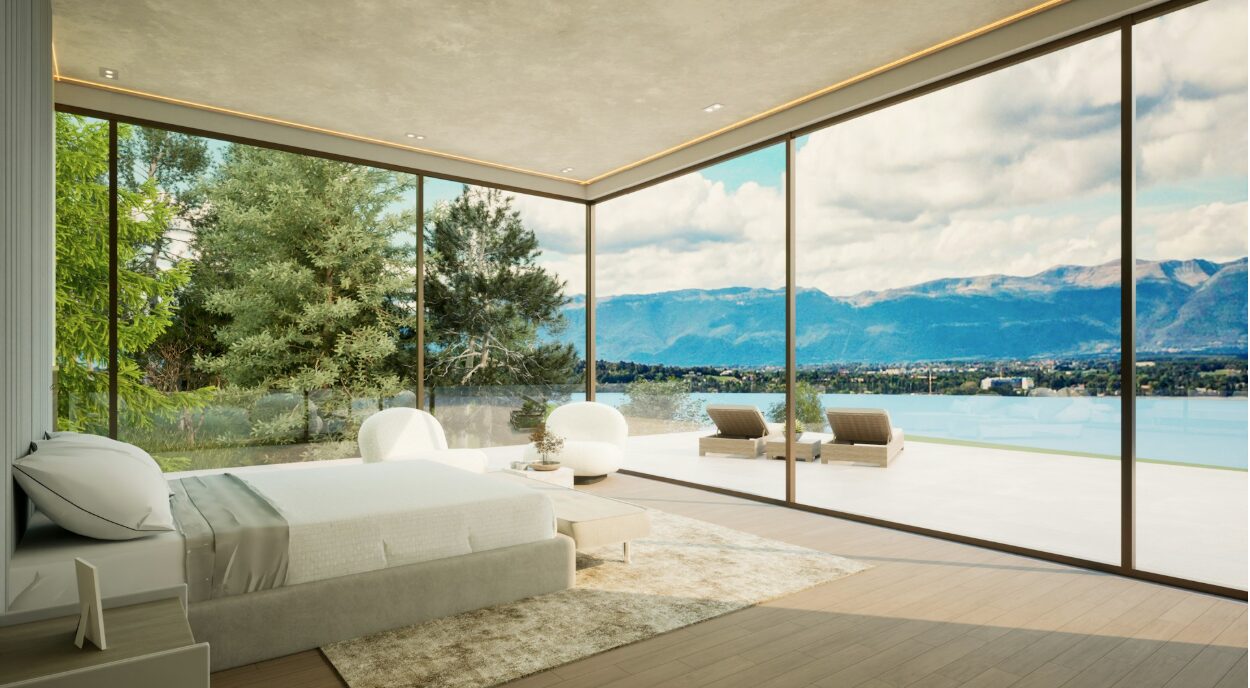
Floor-to-ceiling windows flood a room with natural light, frame outdoor views like artwork, and make even smaller spaces feel noticeably larger.
That openness works beautifully during the day. At night, it creates a different problem.
At some point, usually after sunset, the thought creeps in: Can everyone see inside right now?
If your windows ever make your home feel more like a display case than a retreat, you’re not alone. The good news is you can maintain natural light and your outdoor views while limiting what neighbors and passersby can see inside.
Here are practical ways to control visibility without closing off your space.
Layer Your Window Treatments for Flexibility
One of the most reliable ways to control visibility throughout the day is to layer multiple window treatments.
Instead of relying on a single curtain or shade, combine options so you can adjust to changing lighting conditions.
During daylight hours, sheer curtains soften the view and make it difficult for people outside to see clearly inside. In the evening, heavier drapes or blackout panels give you full privacy when interior lights make your home more visible.
Motorized shades add another layer of control, letting you adjust coverage instantly without interrupting your routine.
Use Window Film for a Clean, Modern Look
If curtains feel too bulky or don’t match your style, window film offers a streamlined alternative.
Frosted or etched films blur interior details while still allowing daylight to pass through. Reflective films act like a mirror during the day, reflecting exterior light back outside rather than revealing your space.
Just keep in mind that this effect depends on lighting. Once it’s darker outside than inside, visibility reverses, which is why most homeowners pair film with shades or drapes for nighttime use.
Let Landscaping Create a Natural Barrier
Privacy doesn’t have to come from inside your home.
Strategic landscaping blocks sightlines before they reach your windows and creates a softer, more natural barrier than interior coverings.
Think in layers:
- ⬥ Tall hedges or privacy trees to block direct views
- ⬥ Mid-height shrubs to fill visual gaps
- ⬥ Fencing paired with greenery to define boundaries
This approach takes a season or two to fill in, but once established, it can block direct sightlines from neighbors while still allowing filtered views outward.
Rethink How You Use the Space
Even with the right window treatments, layout plays a major role in how exposed a space feels.
If your main seating area sits directly against a wall of glass, the room will naturally feel more open to outside views.
Shifting your layout just a few feet can make the room feel far less exposed:
- ⬥ Angle furniture away from the most visible sightlines
- ⬥ Float seating toward the center of the room
- ⬥ Use open shelving or partial dividers to create separation without blocking light
These changes don’t eliminate the windows. They simply change how you experience them.
Incorporate Architectural Features
If you’re building or planning a renovation, you have more permanent options to work with.
Vertical slats, sliding panels, and exterior pergolas can interrupt direct sightlines without eliminating openness. Overhangs and screens can also limit how easily people can see in from neighboring properties.
These features break up direct sightlines while adding texture, shadow, and depth to an otherwise fully exposed wall of glass.
Adjust Your Lighting for Nighttime Privacy
Once the sun goes down, your home becomes far more visible from the outside.
Adjusting how and where you use light can dramatically reduce how visible your home is at night:
- ⬥ Use lamps and indirect lighting instead of bright overhead fixtures near windows
- ⬥ Install dimmers to reduce glare and interior visibility
- ⬥Close curtains or shades as part of your evening routine
Privacy isn’t a one-time fix. It’s something you adjust throughout the day. Morning light calls for openness. Evening routines call for control.
The homeowners who enjoy these spaces long term aren’t the ones who leave everything exposed. They’re the ones who build in flexibility.
When you can adjust your environment as easily as closing a panel or lowering a shade, those expansive windows stop feeling risky and start working exactly the way they were designed to.
Want Lower Energy Bills? Your Windows Might Hold the Answer
