
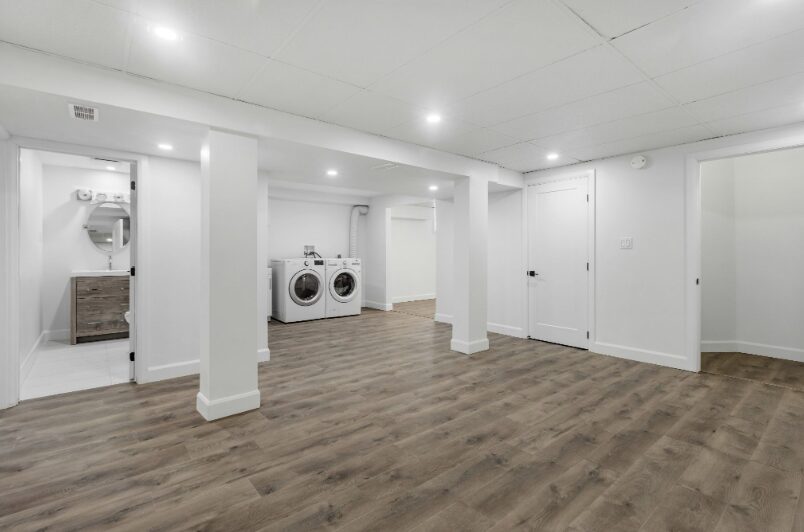
Walk down into your basement for a moment.
What do you see?
If you’re like most homeowners, it’s probably a mix of storage bins, holiday decorations, old furniture, and a few things you forgot you even owned. It’s functional, sure, but it’s not exactly working for you.
Now imagine that same space as something else entirely. A quiet home office. A place for guests to stay. A comfortable family room that actually gets used.
That’s the shift more homeowners are starting to make. The basement isn’t just extra space; it’s untapped space. And in many homes, the signs that it’s time to finish it are already there.
- Your Main Living Areas Are Starting to Feel Tight
It usually doesn’t happen all at once.
A desk shows up in the corner of the living room. The guest bedroom turns into a hybrid office. Storage starts creeping into closets that used to feel organized.
At first, it’s manageable. Then it starts to feel like your home is working against you.
You might notice:
- ⬥ Rooms pulling double duty in ways that don’t quite work
- ⬥ Family members competing for quiet or privacy
- ⬥ Clutter slowly taking over shared spaces
When your main floors start feeling cramped, it’s often not about needing a bigger home. It’s about using the space you already have more intentionally.
- Your Basement Is Already (Mostly) Ready
Not every basement needs a full overhaul to become usable.
In fact, many are closer than homeowners think.
A “ready” basement doesn’t have to be perfect, but it should check a few important boxes:
- ⬥ It’s dry, with no ongoing moisture issues
- ⬥ The ceiling height feels comfortable enough for daily use
- ⬥ There are no major foundation concerns
From there, it gets easier.
If you already have some electrical work in place, or even partially finished walls or flooring, you’re not starting from scratch. You’re building on what’s already there, which can make the project feel far more doable.
- You Can Clearly Picture How You’d Use the Space
This is where things start to click.
Once you stop thinking of your basement as “just storage,” ideas tend to come quickly. And the clearer the purpose, the easier it becomes to justify the investment.
For many homeowners, that purpose looks like:
- ⬥ A dedicated home office that separates work from daily life
- ⬥ A guest suite that makes hosting easier and more comfortable
- ⬥ A media room or hangout space for relaxing evenings
- ⬥ A playroom that keeps toys (and noise) contained
- ⬥ A home gym that removes the need for a commute
You don’t need five different uses. You need one strong reason that makes you think; we’d actually use this.
- You’re Thinking About Long-Term Value
Finishing a basement means you’re not only building for today, but you’re improving your home’s future value.
While it’s not always a dollar-for-dollar return, a finished basement does something important: it increases usable living space. And that matters to buyers.
It can also:
- ⬥ Make your home feel more flexible and functional
- ⬥ Help your listing stand out in a competitive market
- ⬥ Appeal to buyers looking for move-in-ready features
Even if selling isn’t on your immediate radar, it’s a smart way to invest in both livability and long-term appeal.
- You’re Planning to Stay Put for a While
Some home projects are all about resale.
This one leans more toward lifestyle.

If you intend to remain in your home for the coming years, your basement renovation project should focus more on enhancing your daily living experience rather than solely on recovering every dollar spent.
Think about a growing family that needs more room to spread out. Or a homeowner who’s working remotely and wants a space that actually supports focus.
In those cases, the payoff shows up in how often the space gets used and how much easier your home feels to live in.
- You’re Tired of Letting the Space Go to Waste
An unfinished basement tends to become a default zone. Things get stored there because there’s nowhere else to put them.
Over time, that can lead to:
- ⬥ Disorganization that’s hard to manage
- ⬥ Missed maintenance issues, like small leaks or poor insulation
- ⬥ A space that feels disconnected from the rest of your home
Finishing your basement changes that dynamic.
It forces you to address the underlying issues: moisture, airflow, and insulation, while turning the space into something intentional. Something that gets used, maintained, and appreciated.
- You’re Open to Starting Small
One of the biggest misconceptions about basement projects is that they have to be all or nothing.
They don’t.
Many homeowners take a phased approach, tackling the most important elements first and building from there.
That might look like:
- ⬥ Starting with waterproofing and insulation
- ⬥ Adding walls, flooring, and lighting over time
- ⬥ Finishing with furniture, storage, and decor
Breaking the project into stages makes it more manageable and often more realistic from a budget standpoint.
The Bottom Line
A basement doesn’t have to stay a forgotten part of your home.
In many cases, it’s the easiest way to create more space without building an addition or moving altogether. The key is recognizing when that unused square footage is starting to hold you back.
If your home feels crowded, your needs have changed, or you’re simply tired of wasted space, it may be time to take a closer look downstairs.
Because sometimes, the extra room you’ve been looking for has been there all along, just waiting to be finished.
Transforming Your Garage or Basement into a Rental Goldmine
Budget-Friendly Basement Remodel Ideas That Make a Big Impact
