
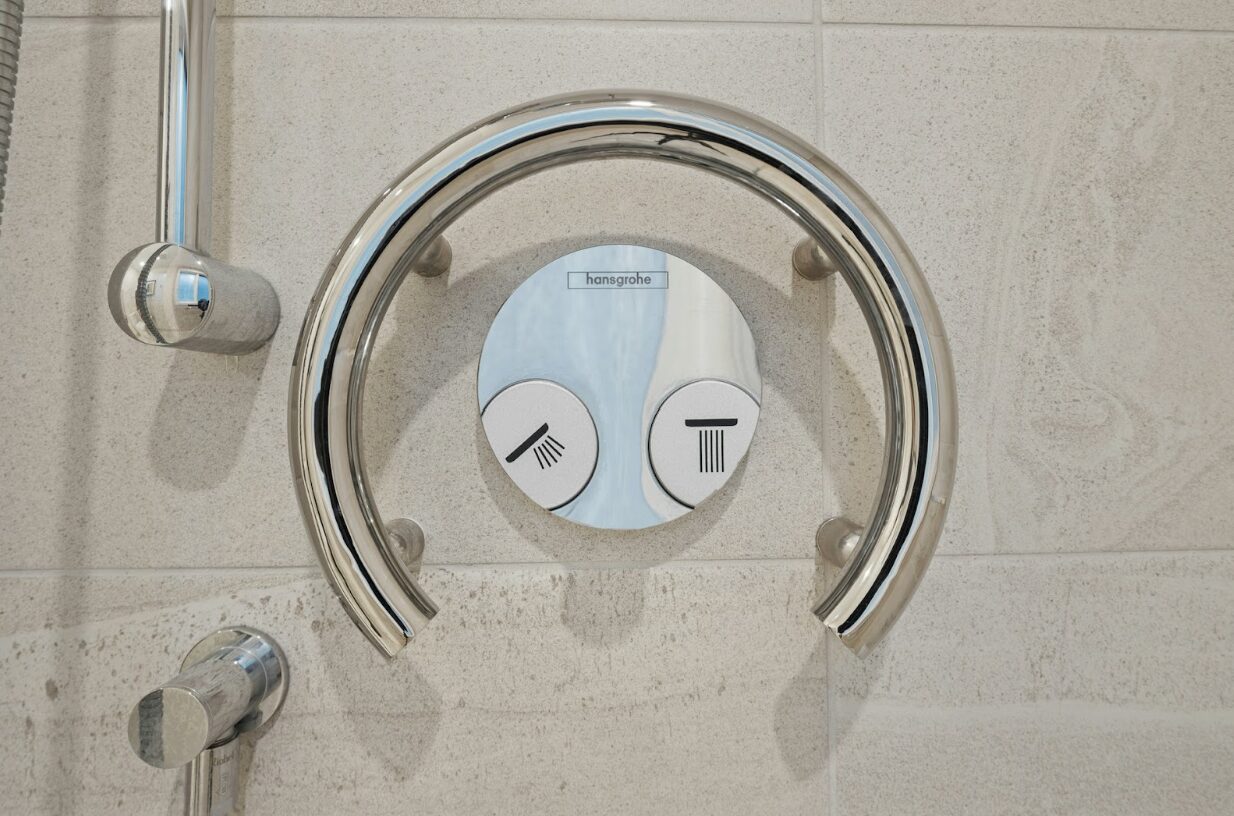
For years, “accessible design” came with a certain stigma. It often meant bulky grab bars, sterile finishes, and spaces that felt more clinical than comfortable. But that’s changing fast.
Today’s homeowners, especially those planning for long-term living, want homes that support mobility without sacrificing style. And the good news? You no longer have to choose between the two.
Let’s take a closer look at how thoughtful design is making homes safer, more functional, and still beautiful.
Accessibility That Blends In (Instead of Standing Out)
The biggest shift happening right now is subtlety.
Design features that once felt obvious are now seamlessly integrated into the home’s overall aesthetic. The goal isn’t to highlight accessibility, it’s to make it feel natural.
Take grab bars, for example. Instead of the standard stainless steel look, homeowners are opting for bars that double as towel racks or are finished in matte black, brushed gold, or bronze. They blend right into the design while still doing their job.
It’s the same idea throughout the home: support without spotlight.
Curbless Showers Are Leading the Way
If there’s one feature that perfectly captures this trend, it’s the curbless shower.
These walk-in showers eliminate the step-over threshold, creating a smooth transition from the bathroom floor into the shower space. Not only does this reduce the risk of trips and falls, but it also creates a clean, modern look that feels high-end.
Pair that with large-format tile, linear drains, and frameless glass, and you’ve got a space that looks like it belongs in a luxury hotel, not a retrofit.
Wider Doorways, Smarter Layouts
Mobility-friendly design considers how the entire home flows.
Wider doorways and hallways make it easier to move through the home, whether you’re carrying groceries, pushing a stroller, or planning ahead for future needs. Open floor plans reduce obstacles and create more usable space.
And here’s the thing: these upgrades don’t just benefit one stage of life. They make everyday living easier for everyone.
Lighting That Works Harder (and Smarter)
Lighting plays a bigger role than most homeowners realize.
As we age, visibility naturally decreases, which makes proper lighting essential. But that doesn’t mean harsh, overly bright fixtures.
Instead, layered lighting is key:
- ⬥ Ambient lighting for overall visibility
- ⬥ Task lighting in kitchens and bathrooms
- ⬥ Accent lighting to reduce shadows and improve depth perception
Add in motion-sensor lights for hallways or nighttime bathroom trips, and you’ve got a home that quietly supports safety without feeling intrusive.
Lever Handles and Touch-Friendly Fixtures
Small details can make a big difference.
Traditional knobs can be difficult to grip, especially for anyone dealing with arthritis or reduced hand strength. Lever-style handles, touchless faucets, and easy-to-operate fixtures offer a simple upgrade that improves usability instantly.
And thanks to modern design options, they look just as sleek as their traditional counterparts.
Non-Slip Surfaces That Still Look High-End
Safety doesn’t have to mean sacrificing style underfoot.
Today’s flooring options include slip-resistant tile, luxury vinyl, and textured finishes that provide traction without looking industrial. In bathrooms, matte tiles and smaller grout lines can help reduce slips while maintaining a clean, cohesive design.
It’s one of those upgrades you don’t think about until you’re glad you did it.
Planning Ahead Without Overcommitting
Here’s where many homeowners get stuck: they don’t want their home to feel like it’s designed for aging.
That’s fair. But designing for mobility today doesn’t mean locking yourself into a specific future; it just means keeping your options open.
Reinforced bathroom walls for future grab bars. Slightly wider hallways. A main-floor living setup. These are the kinds of decisions that don’t change how your home feels today, but can make a huge difference later.
The Bottom Line
Designing for mobility is about creating a home that continues to work for you over time, not a final verdict.
And when it’s done right, no one walking into your home will think “accessible design.”
They’ll just think it looks really, really good.
Aging in Place: How to Help Your Parents Stay in Their Home
6 Tips for Aging in Place or Universal Design
Designing Open Floor Plans: How to Maximize Mobility and Accessibility for Aging Adults
